 Sports · North Weekly
Home Energy Crude Oil By Julianne Geiger - Oct 26, 2026, 6:00 PM CDT China is urging its oil and gas giants to boost domestic production, as the Iran war exposes Beijing's dependence on imported energy. China has drawn heavily on its massive crude reserves, with inventories falling 162 million barrels since May as high oil prices discourage imports. Beijing is turning to domestic drilling and Russian supplies, seeking to replace disrupted Iranian crude and strengthen long-term energy security.
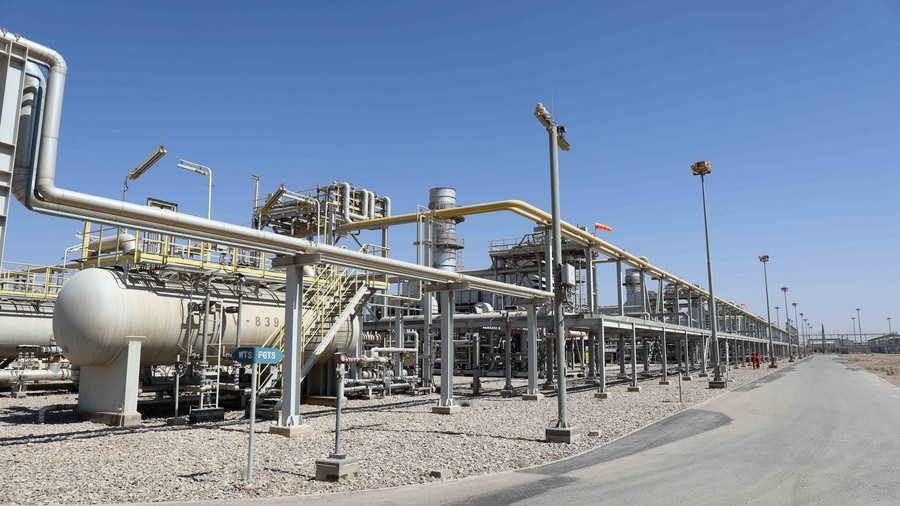
China needs its biggest oil and gas producers to drill more, explore more, and build strategic supply bases as the Iran war forces Beijing to confront an uncomfortable reality: even the world's largest crude stockpile cannot replace a dependable supply of oil indefinitely. China's National Energy Administration has called on PetroChina, Sinopec, CNOOC, and other domestic producers to expand production capacity, increase investment, and accelerate the development of national oil and gas supply bases. The directive, issued following an October 21 meeting, calls for steady growth in crude production and rapid growth in natural gas output.
Beijing has been pursuing greater domestic energy production for years. But eight months of disruptions to Middle Eastern oil shipments, soaring freight costs, and the effective disappearance of Iranian crude from the market have added some urgency to the effort. China has managed the crisis better than most major oil importers, largely because it spent years buying crude when prices were favorable and storing enormous quantities of it.
That strategy has paid off handsomely so far in 2026. When the Iran war began in February, China was sitting on an estimated 1.3 billion to 1.4 billion barrels of crude in commercial and strategic inventories. Those reserves allowed Chinese refiners to dramatically reduce imports when Brent surged above $100 per barrel.
Rather than compete for increasingly expensive barrels, Beijing simply started using the ones it had already purchased. The result was a reduction in Chinese buying that helped offset some of the global supply lost to the conflict. In June alone, China's crude imports fell by an estimated 4.4 million barrels per day compared with the 2025 average.
Other major importers, lacking China's considerable inventory cushion, didn't have quite the same luxury. But stockpiles are finite, even China's. In September, Chinese refiners processed approximately 13.99 million bpd of crude, according to official data.
Domestic production contributed 4.43 million bpd, while imports supplied another 9.03 million bpd. That left a shortfall of 530,000 bpd, which analysts estimate was covered by withdrawals from storage. September was the fourth month in five that China had tapped its inventories.
Still, Beijing is hardly running on fumes. Data from EA Crude Oil Inventories put Chinese onshore crude stocks at approximately 1.192 billion barrels during the week ending October 19. That's down 162 million barrels from an early May record, but only 13 million barrels below the same period last year.
China has effectively spent much of the war consuming oil it bought when prices were considerably more attractive, while keeping much of its overall inventory cushion intact. That flexibility is becoming increasingly valuable as another source of discounted crude disappears. Iran's oil exports, which continued reaching Chinese buyers from offshore storage even after Washington imposed its naval blockade, have reportedly dried up.
Kpler estimates that Iran's floating crude inventories available for delivery to China fell below 1 million barrels by October 5 and were subsequently exhausted. For years, Iranian crude offered China's independent refiners access to discounted barrels that helped offset thin refining margins. U.S. sanctions complicated those purchases, but the availability of shadow fleet tankers and offshore storage allowed the trade to continue.
The naval blockade has changed that arrangement considerably. Chinese refiners now face the prospect of replacing Iranian barrels with more expensive alternatives from the Middle East, Africa, and elsewhere, often while paying extraordinarily high freight rates. Beijing is also looking to Russia.
On October 21, China and Russia agreed to support companies seeking to expand oil cooperation, according to Chinese state media. The announcement contained no specific new supply commitments, but it reinforced the importance of Russian crude to China's efforts to diversify its imports. Russia already supplies China through both pipelines and seaborne shipments.
And discounted Russian grades provide an alternative to more expensive barrels elsewhere. But this doesn’t automatically create additional oil. Russia's production has been declining, and expanding deliveries would require sufficient transportation capacity, financing, and available crude.
That brings Beijing back to domestic production. China produced approximately 216 million metric tons of crude in 2025, a record, while natural gas output exceeded 260 billion cubic meters. Gas production has increased by more than 10 billion cubic meters annually for nine consecutive years.
Those are substantial achievements. They have not, however, eliminated China's dependence on foreign energy. In September, China imported more than twice as much crude as it produced domestically.
And increasing that domestic production is becoming more difficult. China's latest strategy emphasizes deepwater exploration, deep underground formations, unconventional resources, and extracting additional production from mature oilfields. None of those are particularly cheap propositions.
It takes considerable capital to develop technically challenging resources, not to mention specialized equipment and years of exploration and construction. Throw in natural decline rates and the challenges mount. Beijing's state-controlled energy companies may have the financial backing and political direction to pursue projects that would struggle to compete with cheaper imported crude on strictly commercial terms.
But an economically unattractive barrel can start looking considerably more attractive when imported oil is unavailable or costs more than $100. Natural gas presents another challenge. China wants faster domestic production growth as disruptions to LNG shipments from the Persian Gulf demonstrate that import vulnerability extends well beyond crude.
Expanding domestic gas supplies could reduce exposure to LNG price spikes and shipping disruptions, particularly as industrial consumption and electricity demand continue growing. The strategic supply bases outlined by the energy regulator are intended to support longer-term domestic production, rather than simply adding more barrels to storage. Of course, crude inventories can cover immediate shortages, but new oilfields cannot.
Meanwhile, China's immediate purchasing decisions remain closely tied to international prices. October crude imports are expected to recover above 10 million bpd, helped by cargoes purchased when Brent briefly fell below $80 in August. But with prices climbing again, FGE NexantECA and Energy Aspects have reduced their fourth-quarter Chinese import forecasts to approximately 9.2 million to 9.3 million bpd.
Beijing can continue drawing inventories when prices are unattractive and rebuilding them when cheaper barrels become available. And additional domestic production would give China another way to reduce its exposure to volatile international markets. But it won't eliminate the need for imported crude in the short term.
Even modest increases in domestic output, strategic inventories, and diversified suppliers, could change how aggressively the world's largest oil importer needs to compete for available barrels. And with global oil supplies already constrained, China's ability to buy less when prices rise remains one of the few substantial sources of flexibility left in the market. By Julianne Geiger for Oilprice.com More Top Reads From Oilprice.com IEA’s Birol: Energy Prices Won’t Return to Pre-War Levels in 2027 India’s BPCL to Cut Russian Oil Imports Due to Higher Prices Russian Refiners Ramp Up Diesel Output to Supply Trump Deal Download The Free Oilprice App Today Back to homepage Julianne Geiger Julianne Geiger is a veteran energy journalist and market analyst with more than a decade of experience covering the global oil and gas sector.
Her... More Info Leave a comment EXXON Mobil -0.35 Open 57.81 Trading Vol. 6.96M Previous Vol. 241.7B BUY 57.15 Sell 57.00